Activewear designed around a specific problem: runners and cyclists training in low light need visibility without wearing reflective vests or armbands. Pulse integrates LED features directly into performance fabrics—function before aesthetics, technology that doesn't compromise silhouette or movement.


The concept explored whether you could make safety features feel essential rather than added-on. Minimal design language, monochromatic palette (soft greys, deep blacks, icy blues), clean lines. LEDs positioned strategically—chest, arms, legs—where they create visibility without the reflective vest aesthetic.


This was my first AI-driven design project. Using artificial intelligence to generate concepts, explore silhouettes, and test material combinations I wouldn't have considered otherwise. The technology accelerated ideation but didn't replace design thinking—every output still required curation, refinement, technical validation.

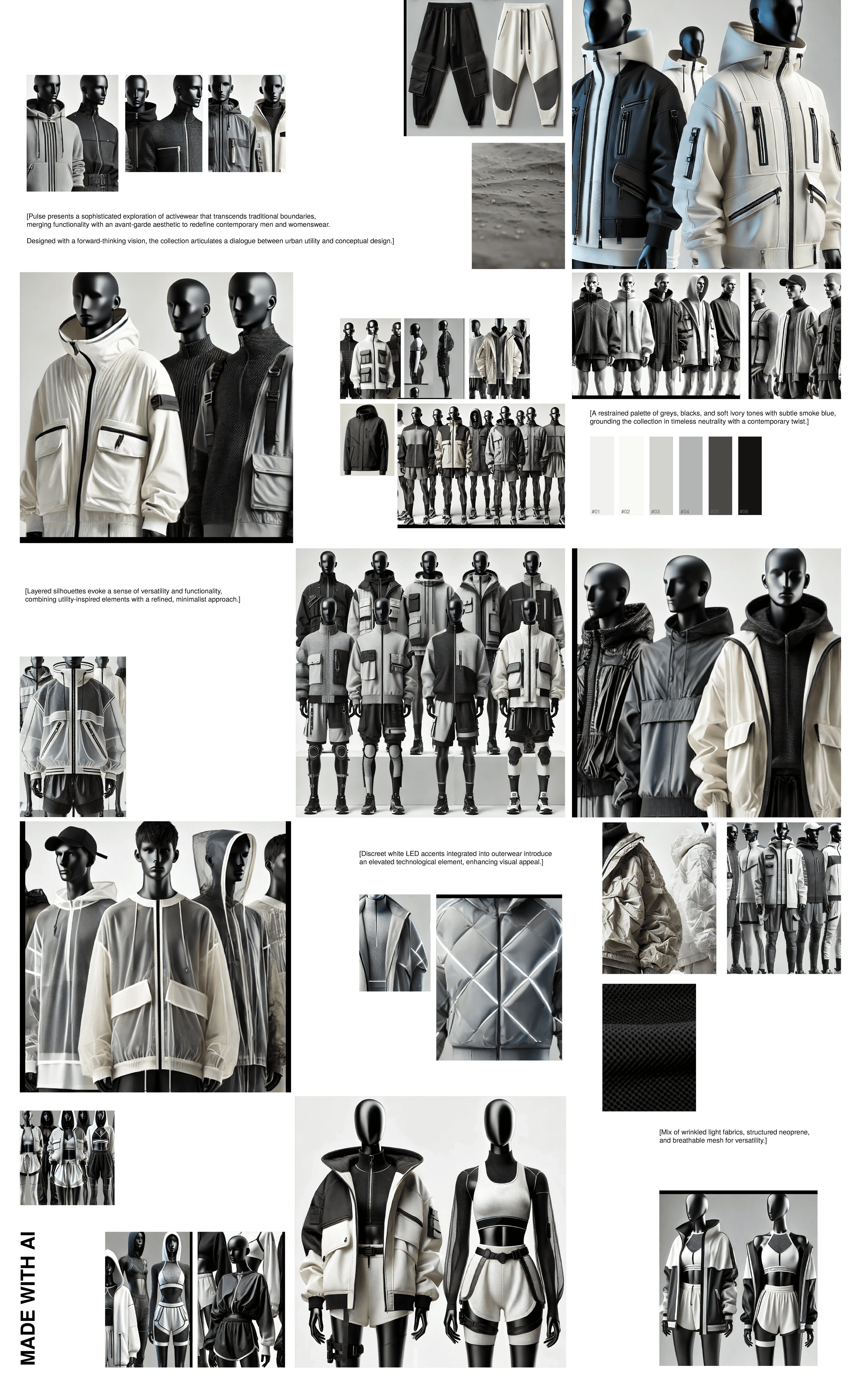
Pulse LED activewear AI-generated concept, monochromatic technical outerwear in off-white, grey, black with LED integration

Lightweight technical fabrics with moisture management and four-way stretch. LED integration required rethinking construction—wire routing, battery placement, seam placement that didn't interfere with movement or washing. Not just designing garments, but designing a system.


The palette stayed deliberately restrained. Monochrome reduces visual noise, lets the LED features register clearly, works across body types without drawing attention to areas people might not want highlighted. Grey gradations created subtle depth without pattern or graphics.


Structured pieces that read athletic without looking bulky. Breathable mesh panels positioned for ventilation. Reflective details supplemented the LEDs for passive visibility. Every element served function—if it didn't enhance performance or safety, it didn't belong.


Pulse remained conceptual—never went into production. The technical complexity and cost structure made commercial viability challenging. But the project proved valuable: exploring AI as design tool, understanding LED integration constraints, testing how far minimalism could go before designs felt cold rather than clean.


The experience shaped how I think about technology in design—not as replacement for craft, but as tool for expanding what's possible. AI accelerates exploration, but human judgment still determines what's worth pursuing.


Built for individuals who train seriously enough to need visibility solutions but care how they look doing it. Activewear where innovation serves purpose, not marketing.


SKILLS:

Design & Concept Development:

Fashion Design, Activewear Design, AI-Assisted Design & Ideation, Concept Development, Silhouette Exploration, Color Strategy, Minimalist Aesthetic


Technical & Innovation: Technical Fabric Selection, LED Integration & Wearable Technology, Performance Fabric Engineering, Construction Problem-Solving, Wire Routing & Battery Placement, Reflective Detail Application


Strategic Thinking: Problem-Led Design, User Needs Analysis, Commercial Viability Assessment, Technology Integration Strategy

Lightweight technical fabrics with moisture management and four-way stretch. LED integration required rethinking construction—wire routing, battery placement, seam placement that didn't interfere with movement or washing. Not just designing garments, but designing a system.


The palette stayed deliberately restrained. Monochrome reduces visual noise, lets the LED features register clearly, works across body types without drawing attention to areas people might not want highlighted. Grey gradations created subtle depth without pattern or graphics.


Structured pieces that read athletic without looking bulky. Breathable mesh panels positioned for ventilation. Reflective details supplemented the LEDs for passive visibility. Every element served function—if it didn't enhance performance or safety, it didn't belong.


Pulse remained conceptual—never went into production. The technical complexity and cost structure made commercial viability challenging. But the project proved valuable: exploring AI as design tool, understanding LED integration constraints, testing how far minimalism could go before designs felt cold rather than clean.


The experience shaped how I think about technology in design—not as replacement for craft, but as tool for expanding what's possible. AI accelerates exploration, but human judgment still determines what's worth pursuing.


Built for individuals who train seriously enough to need visibility solutions but care how they look doing it. Activewear where innovation serves purpose, not marketing.


SKILLS:

Design & Concept Development:

Fashion Design, Activewear Design, AI-Assisted Design & Ideation, Concept Development, Silhouette Exploration, Color Strategy, Minimalist Aesthetic


Technical & Innovation: Technical Fabric Selection, LED Integration & Wearable Technology, Performance Fabric Engineering, Construction Problem-Solving, Wire Routing & Battery Placement, Reflective Detail Application


Strategic Thinking: Problem-Led Design, User Needs Analysis, Commercial Viability Assessment, Technology Integration Strategy